
Ever wonder why you see seaweed in so many thyroid and metabolism supplements these days?
It’s not a marketing gimmick. It’s actually one of those rare cases where traditional wisdom and modern science are saying the exact same thing.
For hundreds of years, people living near the ocean noticed something. When they ate certain brown seaweeds, they felt warmer, more energized, and less sluggish. They didn’t know about thyroid hormones or iodine deficiency. They just knew it worked. So they made it into soups, dried it into powder, and passed the knowledge down through generations.
Today, that seaweed (bladderwrack) is showing up in research labs around the world. And what scientists are finding is honestly fascinating. This unassuming brown algae might be one of the most underrated longevity supplements out there.
The Seaweed That’s Been Healing Thyroids for Centuries
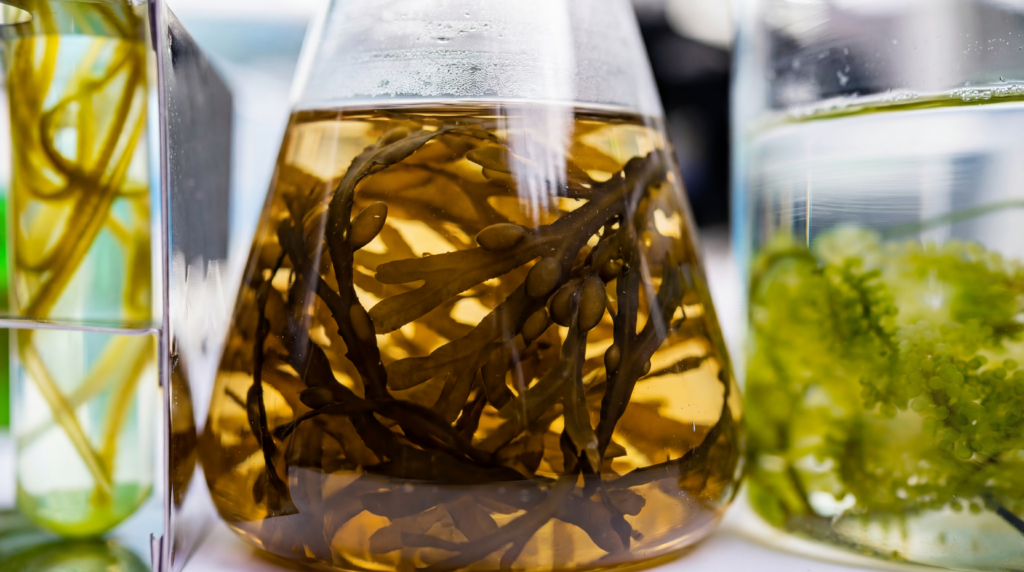
Bladderwrack (Fucus vesiculosus, if we’re being fancy) grows on rocky shores throughout the North Atlantic and Pacific. You’d recognize it instantly. Those little air-filled bladders along each stem that pop when you squeeze them? That’s where the name comes from. Those bladders keep the seaweed floating upright toward the sunlight.
For coastal communities, from Scotland to Iceland to Maine, bladderwrack was just part of life. Nobody called it a “superfood” or put it in $40 bottles with minimalist labels. They simply ate it because they noticed it helped.
Feeling cold all the time? Sluggish? Can’t lose weight no matter what you do? Have some bladderwrack.
They didn’t know the scientific reason why. They just knew it worked. The warmth returned. The energy came back. The brain fog lifted.
Now we know what they didn’t. Bladderwrack is absolutely loaded with iodine, and iodine is the one nutrient your thyroid absolutely cannot function without. Those fishermen and their families were essentially doing targeted thyroid support, centuries before endocrinology was even a field of study.
What Makes Bladderwrack Different?
When scientists study bladderwrack, three things jump out.
First, it’s absolutely loaded with iodine, that crucial mineral your thyroid craves to make its hormones. Second, it’s packed with unique compounds called fucoidan and alginate, which are basically seaweed’s version of fiber but with some pretty impressive health perks. Third, it contains powerful antioxidants you won’t find in land plants, like fucoxanthin (a golden-brown pigment) and phlorotannin’s (seaweed’s answer to green tea’s polyphenols).[1][2][3]
Think of it this way:
- Iodine is the fuel your thyroid uses to keep your metabolism humming, affecting everything from your energy levels to how easily you lose or gain weight.[4]
- Fucoidan and alginate work behind the scenes on things like cholesterol, blood sugar balance, and even immune health.[5]
- Antioxidants are your body’s defense system against daily damage from stress, pollution, UV rays, and even the ultra-processed foods most of us eat more often than we’d like to admit.[6]
What makes bladderwrack special is that all these compounds work together, not in isolation. It’s not a one-trick supplement. It’s more like a whole support system from the ocean, which is why you’ll often see it in formulas designed for metabolism, thyroid health, and overall hormonal balance.
Thyroid Support That Actually Makes Sense
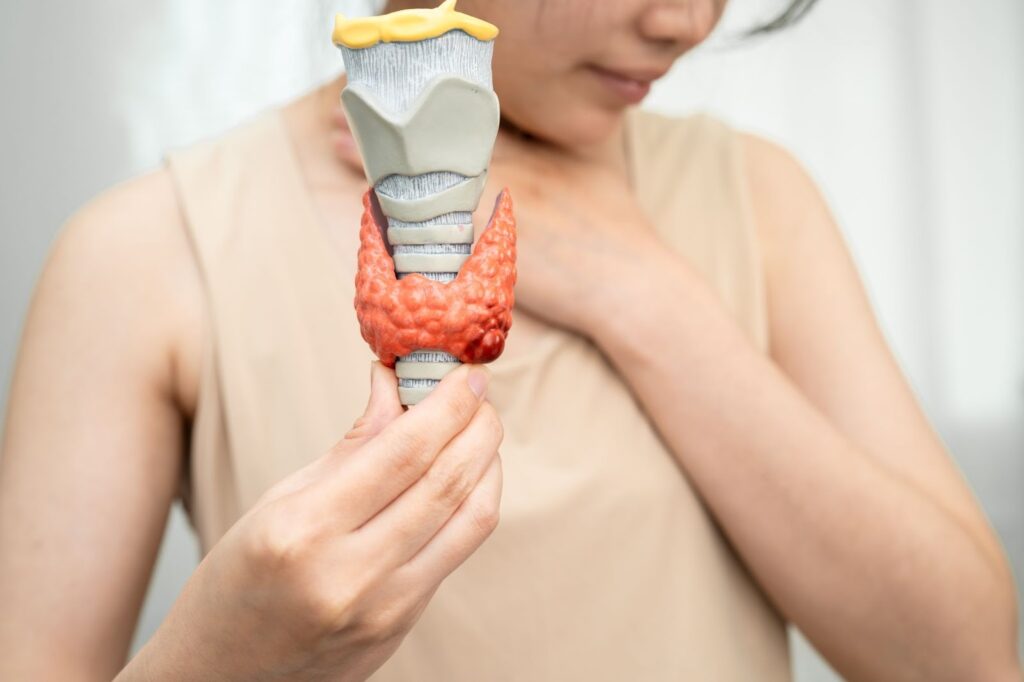
Your thyroid is basically your body’s thermostat and metabolic control center rolled into one tiny butterfly-shaped gland. When it’s running smoothly, you feel energized, warm, clear-headed, and your weight stays stable. When it’s struggling, you might feel perpetually cold (especially your hands and feet), exhausted no matter how much you sleep, foggy-brained, and like your metabolism has just stopped.
The thing your thyroid needs most is iodine. Without it, your thyroid can’t make the hormones that keep everything running. And bladderwrack? It’s absolutely packed with it. We’re talking 47 to over 100 mg of iodine per gram of dried seaweed, which is why coastal communities have been using it for thyroid support for literally centuries.[1]
But here’s what’s important: modern practitioners who use bladderwrack don’t think of it as a sledgehammer. It’s more like a gentle, steady nudge. A good supplement will include bladderwrack as one ingredient among several, giving your thyroid the iodine it needs plus those supportive compounds (fucoidan, antioxidants) that help everything work together smoothly.[4]
It’s meant to work quietly in the background, keeping your thyroid well-fed and happy, not forcing it into overdrive.

Hormones, Cycles, and Women’s Health
One of the most compelling research findings on bladderwrack involves women’s hormonal health.
A small but compelling study followed premenopausal women who had abnormally short cycles, meaning they were getting their periods way too frequently, sometimes every two to three weeks.[7] After taking bladderwrack daily, something shifted. Their cycles normalized, stretching out to a healthier 28-32 day range. Translation? They weren’t dealing with PMS and bleeding every other week anymore.
But it wasn’t just about timing. When researchers measured their hormone levels, they found something fascinating. Estrogen dropped significantly while progesterone rose. If you’ve ever felt anxious, bloated, irritable, or like your emotions are on a rollercoaster in the week before your period, that’s often too much estrogen and not enough progesterone talking.[7]
For women dealing with estrogen dominance (which can show up as heavy periods, bad PMS, breast tenderness, or irregular cycles), this shift toward better balance can be life-changing. You feel steadier, calmer, more like yourself throughout the month.
The researchers even noted that this might be one reason why women in Asian countries who regularly eat seaweed have lower rates of hormone-related health issues.[7] It’s not a magic fix, but it’s a fascinating piece of the puzzle.
The Antioxidant Power You Didn’t Know You Needed
When you think “antioxidants,” blueberries and matcha probably come to mind. But seaweed? Most people don’t even consider it.
Here’s the thing though: bladderwrack is absolutely stacked with antioxidants, just different ones than you’d find in berries. The golden pigment fucoxanthin and those phlorotannin’s we mentioned earlier? They’re incredibly powerful at protecting your cells from oxidative stress, basically the daily wear and tear that happens from pollution, UV exposure, stress, poor sleep, and yes, all those processed foods we consume without thinking.[3][10]
Studies have shown that bladderwrack’s antioxidants can neutralize free radicals (those damaging molecules that age your cells) just as effectively as vitamin E.[8][9] One study on Arctic brown seaweed found that extracts showed up to 66% radical scavenging activity, which is honestly impressive for something most people dismiss as just seaweed.[11]
The best part? You don’t feel anything dramatic when you take it. There’s no buzz like coffee, no immediate energy spike. The benefits are quieter and deeper. Your body gets a steady stream of protective compounds that help it handle the constant low-grade stress of modern life. Over time, that steady support adds up.

How to Actually Use Bladderwrack
You’ll typically find bladderwrack in three forms: capsules, powder, or liquid extracts. Honestly, capsules are the easiest. No seaweed taste, no mess, just pop and go.
But here’s the real secret. Bladderwrack works best when it’s part of your daily rhythm, not a “take it when you remember” kind of thing. Think of it like this: a glass of water, your breakfast or lunch, and your thyroid or metabolism supplement that has bladderwrack as one of the key ingredients. Simple. Consistent. Boring, even.
And that’s exactly the point.
You’re not looking for fireworks or overnight transformations. What you’re building toward (over weeks and months) is subtler but more meaningful. Maybe your hands and feet aren’t ice-cold anymore. Maybe you have consistent energy throughout the day instead of crashing at 2 PM. Maybe your cycles become predictable for the first time in years, or you just feel more balanced. More like yourself.
This is what makes bladderwrack different from trendy supplements that promise the world and deliver nothing. It’s not flashy. It’s not new. It’s been quietly supporting people for centuries, and the science is finally catching up to what coastal communities always knew. Sometimes the best support comes from the sea.
Professional Disclaimer
The information in this article is intended for general education and wellness awareness. It does not provide medical advice or diagnose, treat, or prevent any condition. Individual needs vary, and bladderwrack may not be suitable for everyone. Anyone who is pregnant, nursing, taking medication, has a thyroid condition, a history of iodine sensitivity, or is managing a health concern should consult a licensed healthcare professional before using seaweed-based supplements.
References
[1] Andersen S, Noahsen P, Rex KF, et al. Iodine in Edible Seaweed, Its Absorption, Dietary Use, and Relation to Iodine Nutrition in Arctic People. J Med Food. 2019;22(4):421-426.https://doi.org/10.1089/jmf.2018.0187
[2] Ummat V, Sivagnanam SP, Rai DK, et al. Conventional extraction of fucoidan from Irish brown seaweed Fucus vesiculosus followed by ultrasound-assisted depolymerization. Sci Rep. 2024;14(1):6214. https://doi.org/10.1038/s41598-024-55225-z
[3] Saha M, Rempt M, Stratil SB, et al. Defence chemistry modulation by light and temperature shifts and the resulting effects on associated epibacteria of Fucus vesiculosus. PLoS One. 2014;9(10):e105333. https://doi.org/10.1371/journal.pone.0105333
[4] Zbigniew S. Role of Iodine in Metabolism. Recent Pat Endocr Metab Immune Drug Discov. 2017;10(2):123-126. https://doi.org/10.2174/1872214811666170119110618
[5] Singh A, Jagtap AS, Rajpurohit K, Singh KS. Chemical characteristics and bioactivity potential of polysaccharide extracts and purified fractions from Arctic brown macroalgae. Carbohydr Polym. 2025;352:123222. https://doi.org/10.1016/j.carbpol.2025.123222
[6] Silva MMCL, Dos Santos Lisboa L, Paiva WS, et al. Comparison of in vitro and in vivo antioxidant activities of commercial fucoidans from Macrocystis pyrifera, Undaria pinnatifida, and Fucus vesiculosus. Int J Biol Macromol. 2022;216:757-767. https://doi.org/10.1016/j.ijbiomac.2022.07.110
[7] Skibola CF. The effect of Fucus vesiculosus, an edible brown seaweed, upon menstrual cycle length and hormonal status in three pre-menopausal women: a case report. BMC Complement Altern Med. 2004;4:10. https://doi.org/10.1186/1472-6882-4-10
[8] Filote C, Lanez E, Popa VI, Lanez T, Volf I. Characterization and Bioactivity of Polysaccharides Separated through a (Sequential) Biorefinery Process from Fucus vesiculosus Brown Macroalgae. Polymers (Basel). 2022;14(19):4106. https://doi.org/10.3390/polym14194106
[9] Obluchinskaya ED, Pozharitskaya ON, Lapina IM, et al. Comparative Evaluation of Dynamic Maceration and Ultrasonic Assisted Extraction of Fucoidan from Four Arctic Brown Algae on Its Antioxidant and Anticancer Properties. Mar Drugs. 2025;23(6):230. https://doi.org/10.3390/md23060230
[10] Jerković I, Cikoš AM, Babić S, et al. Bioprospecting of Less-Polar Constituents from Endemic Brown Macroalga Fucus virsoides J. Agardh from the Adriatic Sea and Targeted Antioxidant Effects In Vitro and In Vivo (Zebrafish Model). Mar Drugs. 2021;19(5):235. https://doi.org/10.3390/md19050235
[11] Obluchinskaya ED, Pozharitskaya ON, Gorshenina EV, et al. Arctic Edible Brown Alga Fucus distichus L.: Biochemical Composition, Antiradical Potential and Human Health Risk. Plants (Basel). 2023;12(12):2380. https://doi.org/10.3390/plants12122380