
Moringa has been trusted in traditional wellness for generations. Only recently has modern science started to catch up with what many cultures already knew: this tree carries an unusual amount of nourishment and support in its leaves.
This article looks at Moringa through a gentle scientific lens, explaining how it may support the body in everyday life without diving into heavy technical detail.
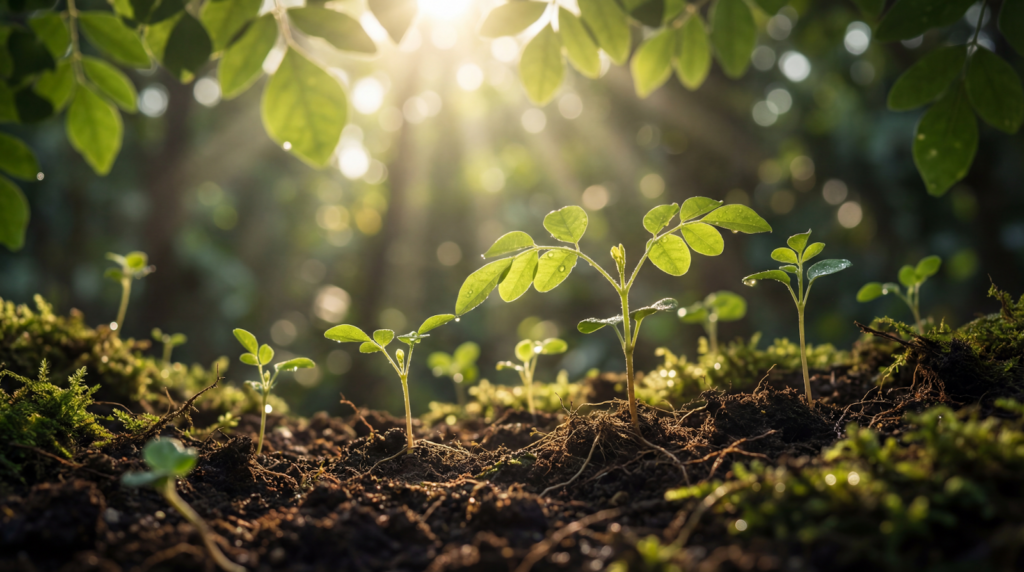
Moringa oleifera is a fast-growing tree that originally grew near the Himalayan region and is now cultivated across Asia, Africa, and many tropical areas. Families have long used its leaves, seeds, and other parts in cooking and home remedies.
Today, most wellness products focus on the leaves, which are considered the most balanced and practical part of the plant for daily use.
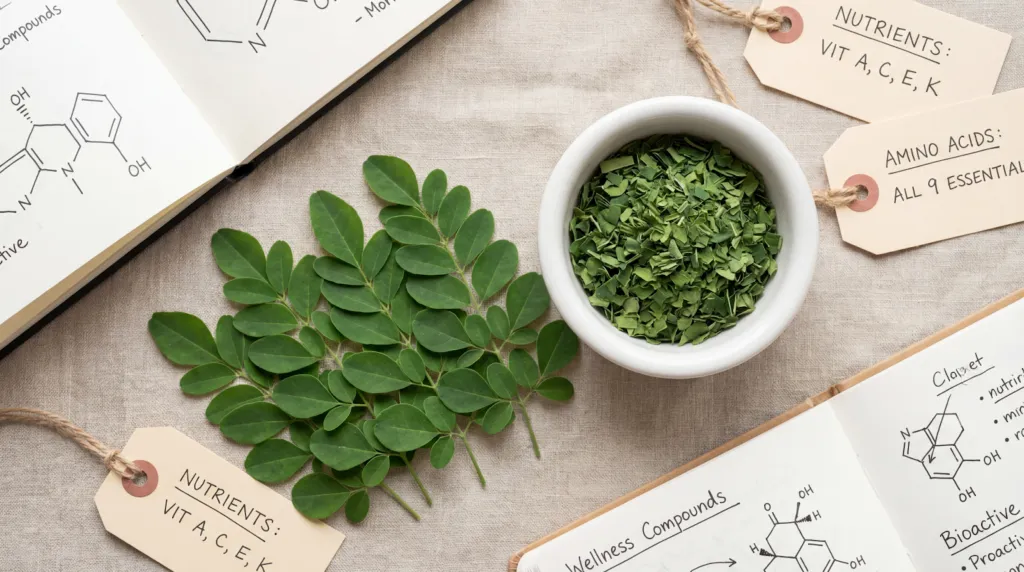
Moringa leaves bring together solid nutrition and a range of natural plant compounds in one place.
They contain:
This combination is why Moringa is often described as nutrient-dense. Rather than relying on a single active ingredient, it offers a natural blend that works together to support overall wellbeing.

Daily life exposes the body to oxidative stress from factors like lack of sleep, processed foods, and environmental exposure. The antioxidant compounds in Moringa help neutralize some of this stress at the cellular level.
In everyday terms, they act like a gentle shield, helping protect cells and tissues over time. This kind of support is especially relevant for long-term health of the heart, brain, and other vital organs.
A short burst of inflammation is normal when the body needs to repair or defend itself. Problems begin when low-grade inflammation lingers longer than it should. Natural compounds in Moringa appear to help ease some of these everyday inflammatory signals.
Used alongside good nutrition, movement, and rest, Moringa can offer quiet support for the body’s own balancing processes.
Modern work with Moringa has looked at its relationship with cholesterol, blood fats, and the health of blood vessels. The picture that emerges is that Moringa may help:
For someone focused on long-term heart wellness, Moringa can be viewed as one supportive element, always alongside medical care and lifestyle habits.

Irregular meals, fast snacks, and modern food choices can leave the body working harder than it should to manage blood sugar. Compounds in Moringa appear to assist the body’s natural handling of carbohydrates and fats.
When woven into a broader routine that includes mindful eating and activity, Moringa may help support steadier metabolic balance.
The liver quietly processes nutrients, hormones, and everyday by-products around the clock. Work with Moringa suggests that its leaf compounds can help protect liver cells from routine stress and support normal liver function.
This does not turn Moringa into a stand-alone “detox” solution, but it does make it a thoughtful addition for those who want to care for this essential organ.
Certain parts of the Moringa plant have shown natural activity against some microorganisms in controlled settings. While this is not a substitute for medical treatment, it does highlight that the plant contains its own built-in defense compounds.
Together with its antioxidants and nutrients, this helps explain why Moringa has long been used as a general supporter of resilience and overall wellness.

Most people use Moringa in simple, practical forms:
For everyday support, consistency matters more than high doses. A good approach is to:
This article is informed by modern scientific work on Moringa oleifera, including a 2023 paper in the International Journal of Molecular Sciences that examined its nutrients, natural compounds, and potential roles in human health.
The information in this article is intended for general education and wellness awareness. It does not provide medical advice or diagnose, treat, or prevent any condition. Individual needs vary, and Moringa may not be suitable for everyone. Anyone who is pregnant, nursing, taking medication, or managing a health condition should consult a licensed healthcare professional before adding new supplements or botanicals to their routine. Always seek professional guidance when making decisions about your health.